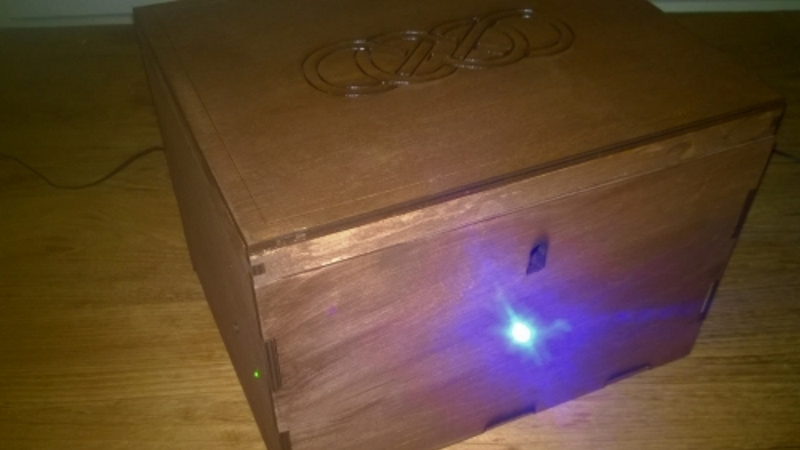
Pandora box fully assembled and stained — a compact wooden box with a webcam lens and wooden peg buttons
Applied Gadgets · Intel Edison

Pandora

A wooden box that pulls faces from old photographs and sends them to the cloud.

Concept

Inspired by the Revenge TV show’s Infinity Box — a physical repository of memories — Pandora is a collector’s box that digitizes the faces from photographs placed inside it. Slip in an old photo; the box extracts every face and uploads it to the cloud where it’s accessible from any device.

The goal was a finished, polished object: not a breadboard in a shoebox, but something that looked like it belonged on a shelf.

Electronics First

The two hardest technical pieces went first: getting live snapshots from the webcam, and sending extracted faces over WiFi to a cloud service.
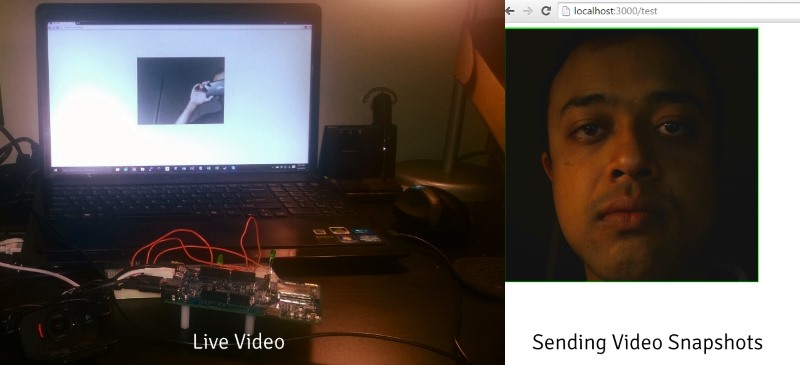
Laptop screen showing live webcam feed being transmitted to a Node.js web service
First milestone — streaming live video over WiFi to a Node.js web service running locally. Once this worked, I added OpenCV face detection to send only extracted faces.

With that working, I installed OpenCV on the Intel Edison, implemented face detection and cropping, and wired up the full pipeline: photo in → face detected → cropped face uploaded to Azure-hosted Node.js service → accessible from any browser.
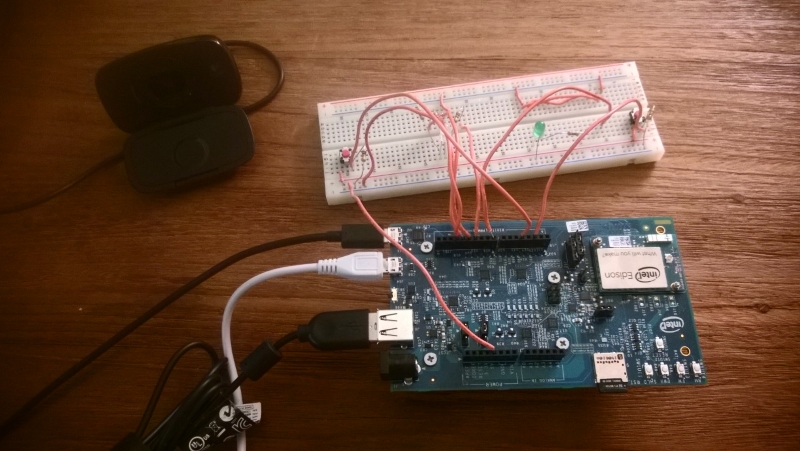
Intel Edison connected to a breadboard with buttons and LEDs wired up
Edison on breadboard. I needed a trigger button (camera shutter), a reset button, a progress LED for OpenCV computation and WiFi transfer, and an RGB LED indicating good vs. bad memory state.
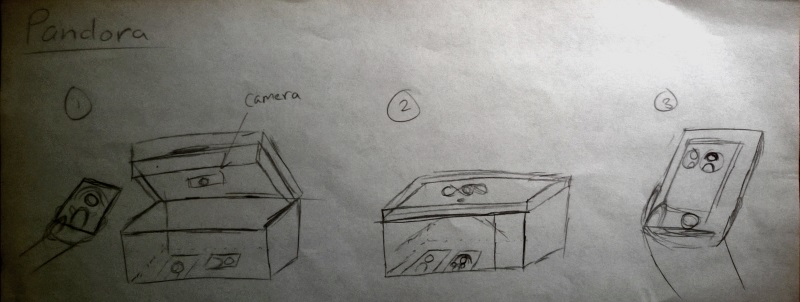
Hand-drawn sketch of the box interaction: photo goes in, face comes out to the cloud
Interaction sketch. The entire surface interaction is just: open box, place photo, press button.

Building the Box

I used InkScape to design laser-cut plywood sides with box joints — interlocking tabs that snap together without glue, relying entirely on friction. The cut files went straight to a laser cutter.
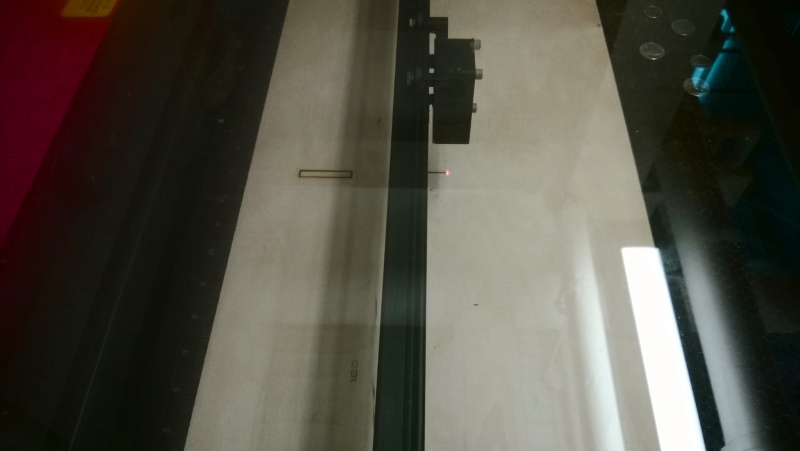
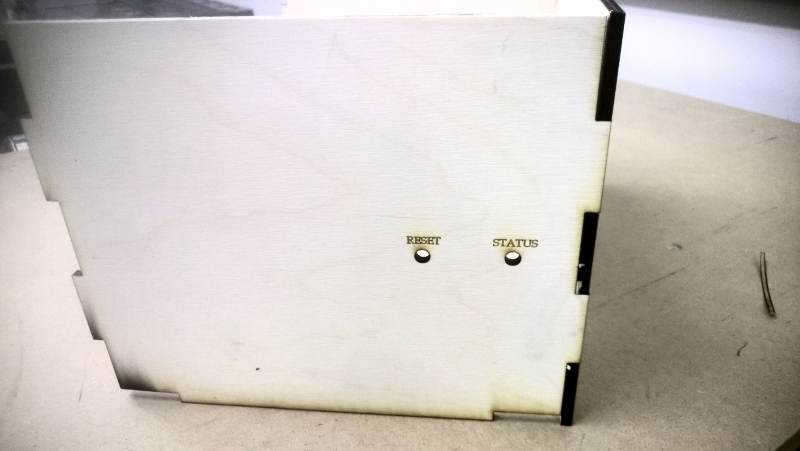
Laser-cut plywood panels laid out showing the box joint tab patterns
Laser-cut panels. The tab-and-slot geometry was drawn in InkScape and cut from plywood.
Single assembled box side showing the reset button hole and LED aperture
One wall assembled. The button hole and LED aperture are cut into the panel — the joints hold it all without glue.
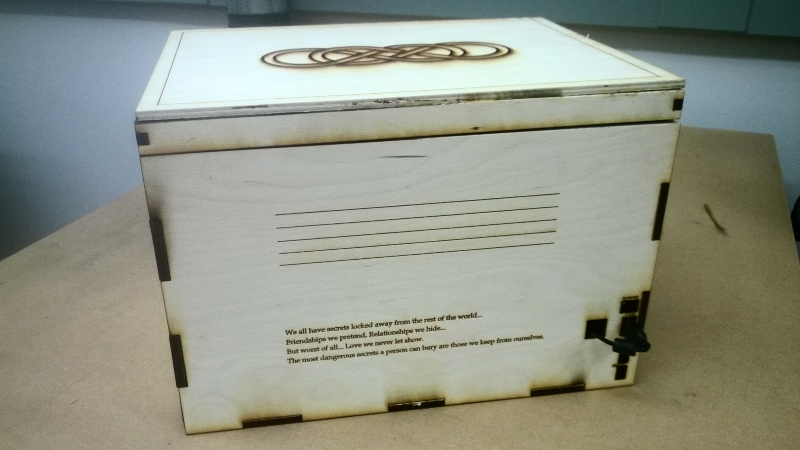
Back of assembled unfinished box showing port cutouts
Back panel with port cutouts for USB and power. Labels laser-etched directly into the wood.
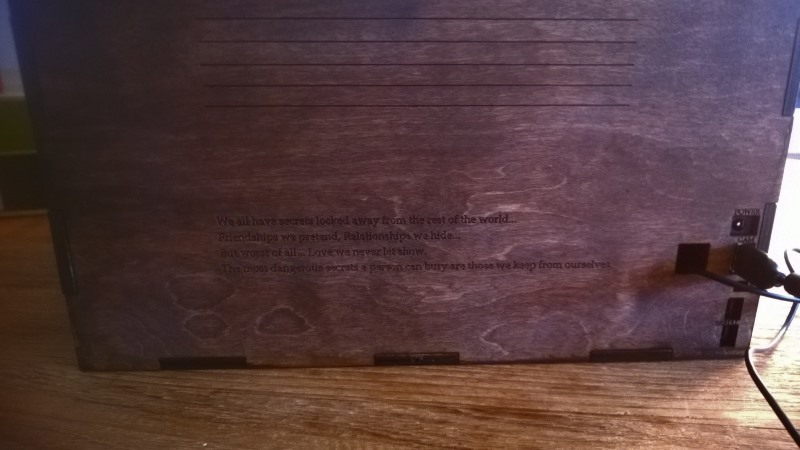
Back of stained box showing port labels showing through stain
After staining — the laser-etched labels show through the stain cleanly.

Finishing

A water-based wood stain over the whole box. Scrap pieces of wood were shaped and fitted into the button holes as pegs.
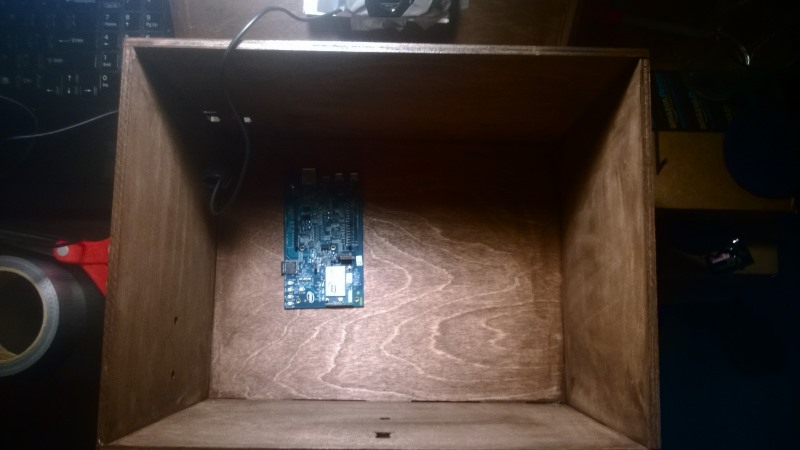
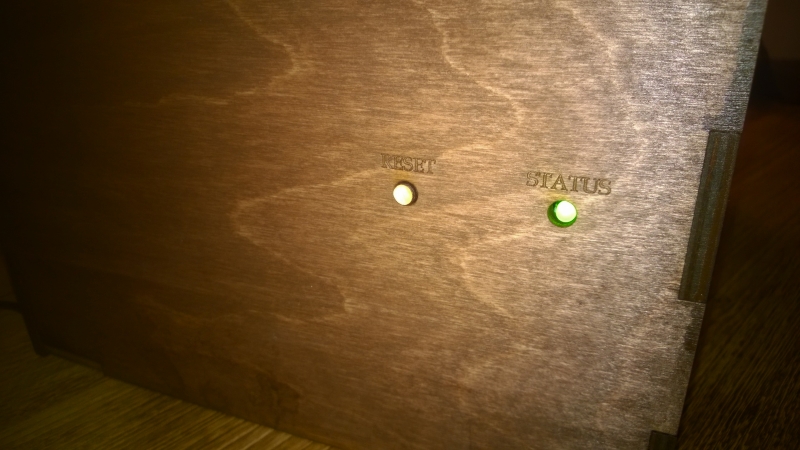
Inside of stained box before Edison installation
Interior after staining, before the Edison was fitted.
Side of box with wooden peg button and green LED installed
Stained side panel with wooden peg trigger and green progress LED.
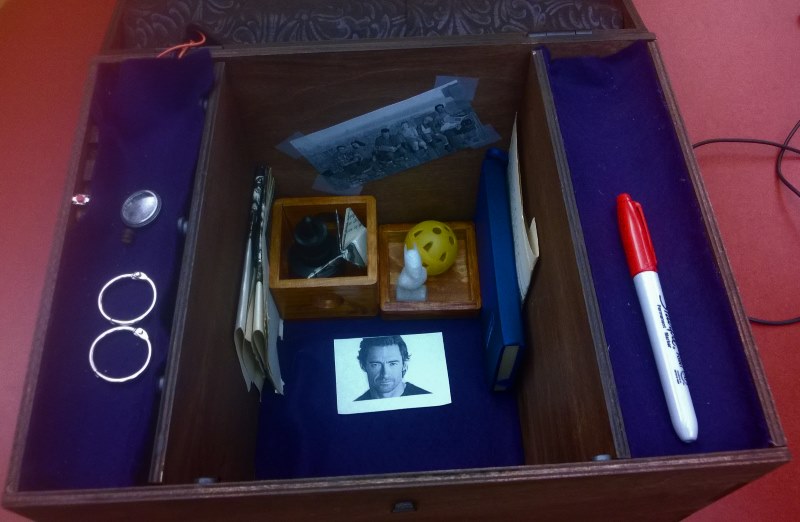
Open box interior showing collected mementos and photographs including Hugh Jackman
Interior dressed as the Infinity Box — old photographs and mementos stored alongside newly captured faces.

Stack

  • Intel Edison — main compute, runs OpenCV face detection
  • OpenCV — face detection and extraction
  • Node.js / Azure — cloud service receiving, storing, and serving face images
  • InkScape + laser cutter — box panels and joints