Improving Task Performance in an Affect-mediated Computing System
Can a computing system that detects and responds to a user's emotional state measurably improve their task performance?
Abstract
In this project, I researched how an affect-mediated system, a computing system that adapts its actions and behavior to the emotional state of its users, can improve their abilities to complete tasks and meet their goals.
In particular, I applied facial expression recognition, one method for estimating a human’s emotional state, to a children’s game, giving it the ability to adjust its difficulty based on its player’s perceived unease. Through experimentation with this game, we sought to understand whether affect-mediation can help users achieve their goal of winning the game, and whether in general affect-mediated systems can aid in user task completion.
The written thesis spans 97 pages.
The Question
Can a computing system that reads a user’s emotional state and adapts its behavior in real time actually help that user perform better? This senior honors thesis investigated that question by building the system and running an IRB-approved study with children.
The domain: affect-mediated computing — systems that change their behavior based on detected emotional state. The mechanism: facial expression recognition. The test bed: a children’s game with five escalating difficulty phases.
Facial Expression Recognition Engine
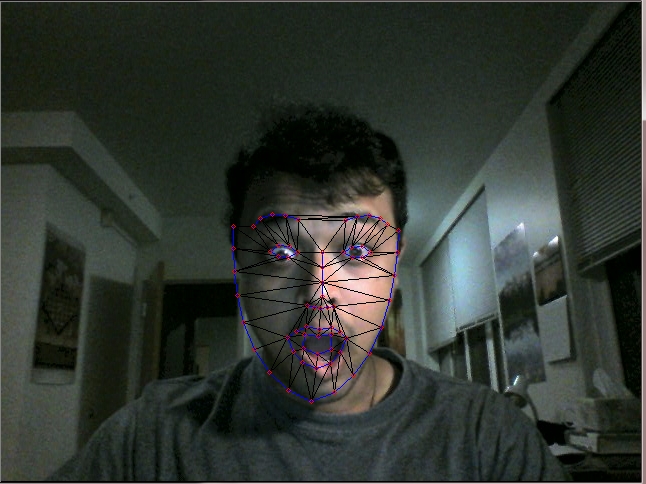
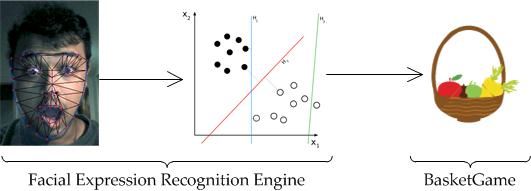
I built a recognition engine on top of Jason Saragih’s FaceTracker, which could localize and track a face in a video frame. On top of that, I trained a support vector machine (SVM) using the Cohn-Kanade+ emotion-labeled face dataset to classify Paul Ekman’s seven fundamental emotions from the tracked facial geometry.
BasketGame
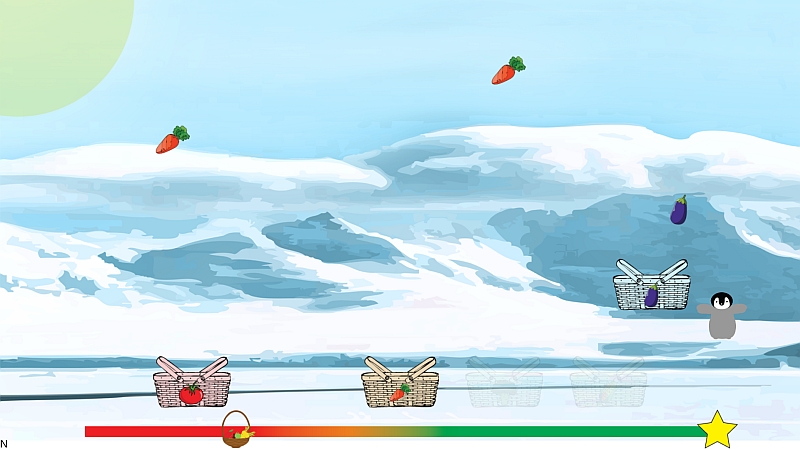
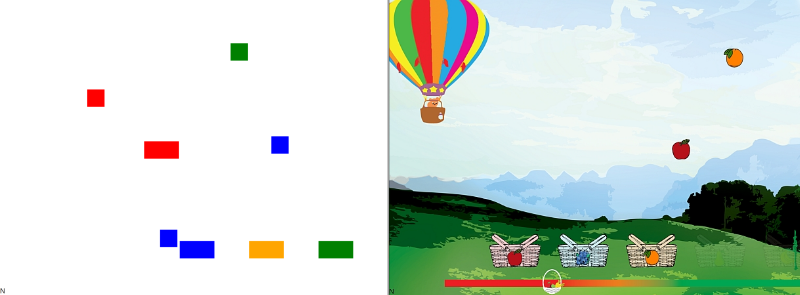
The game — BasketGame — was designed specifically as a controllable test environment. Colored food items fall from the top of the screen; the player catches them with matching baskets. Five phases of increasing difficulty require the player to manage more variety, faster fall speeds, and less predictable positions.
The key mechanic: if the FER engine detected frustration or anger, the game would hold the current phase rather than advancing — keeping the player in a range of challenge they could manage, rather than pushing them to overwhelm.
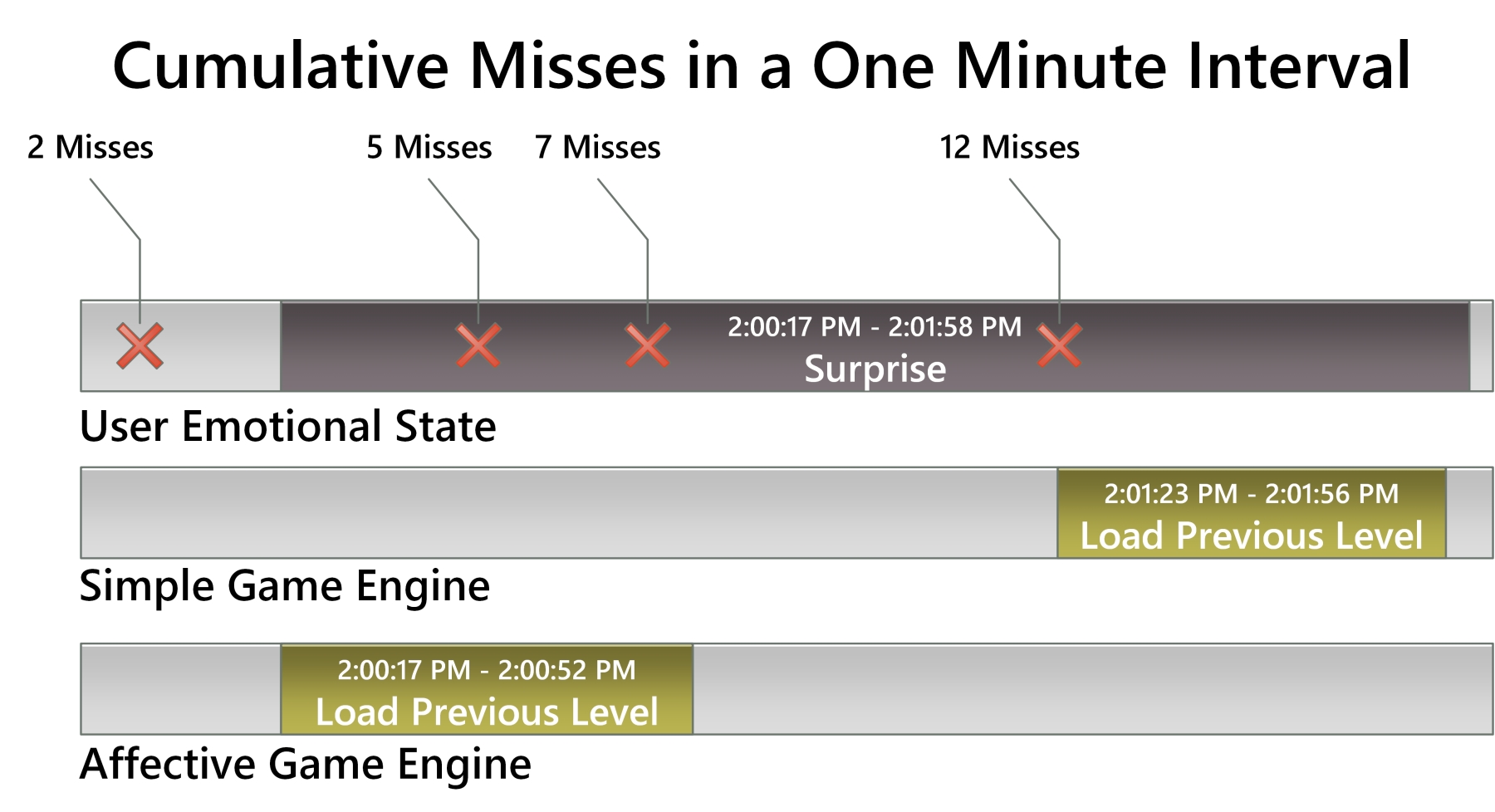
Experiment
Participants were four and five-year-old children from CMU’s Children’s School. Paired experimental-control sessions: one group played with the affective engine enabled, the other with a fixed-difficulty control engine.
Results across three measures:
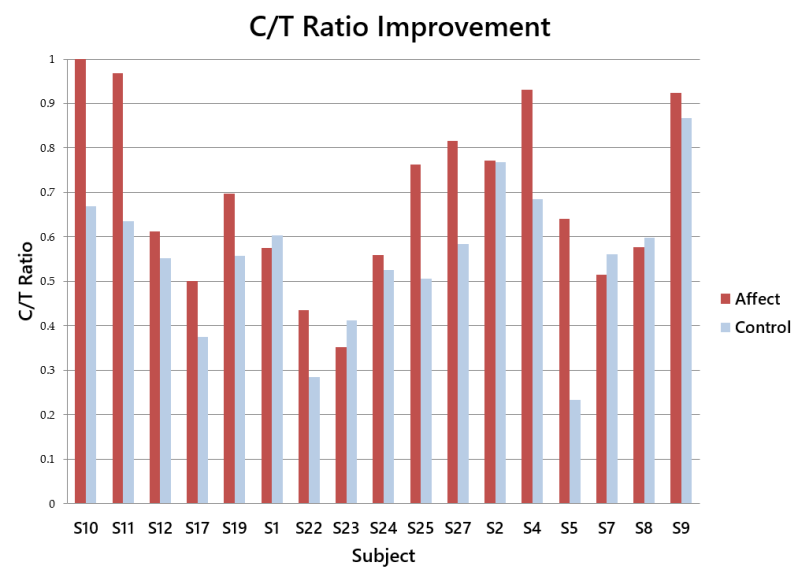
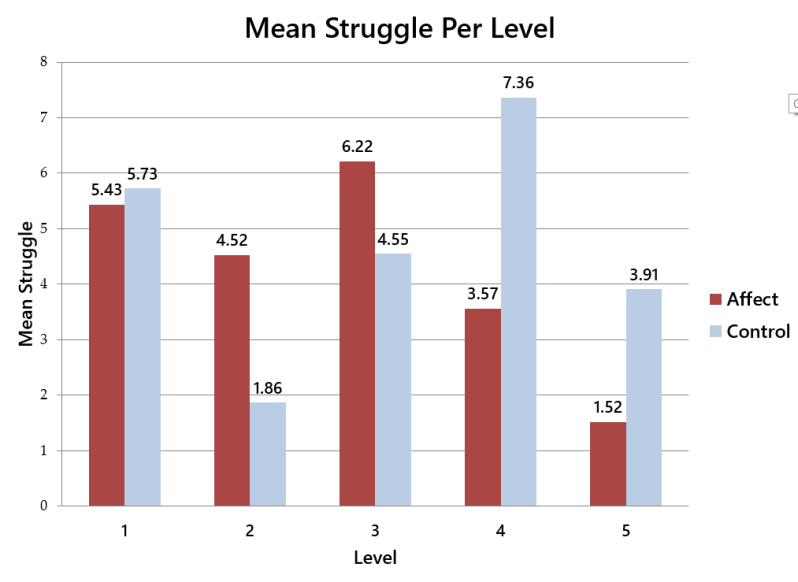
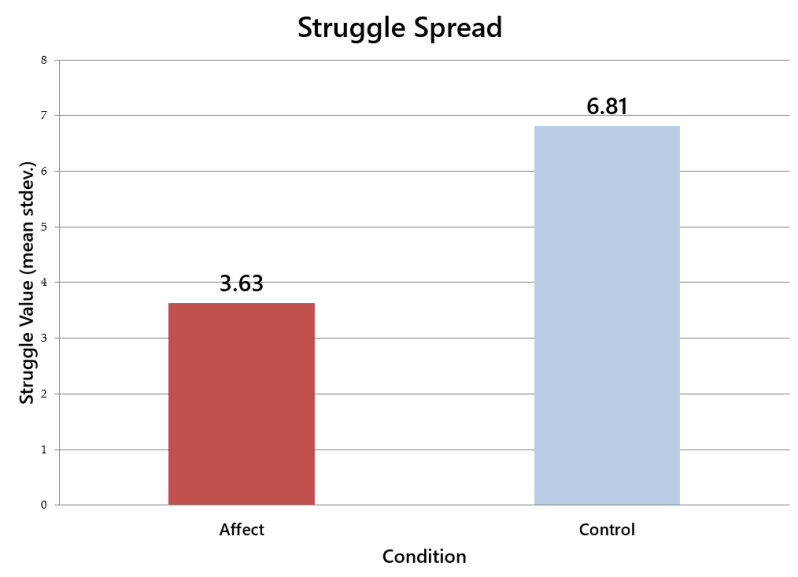
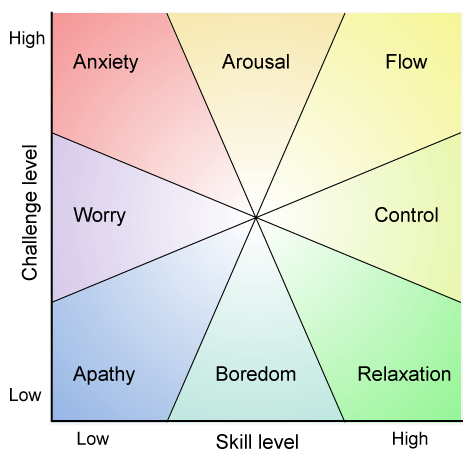
The results pointed toward a state psychologist Mihaly Csikszentmihalyi calls flow — the condition of being optimally challenged, neither bored nor overwhelmed. The affect-mediated engine appeared to nudge participants toward it.
Role
Built everything from the ground up — the recognition engine, the game, the study protocol — and ran it with real participants under IRB approval. Published at FLAIRS 2014.