StampMouse
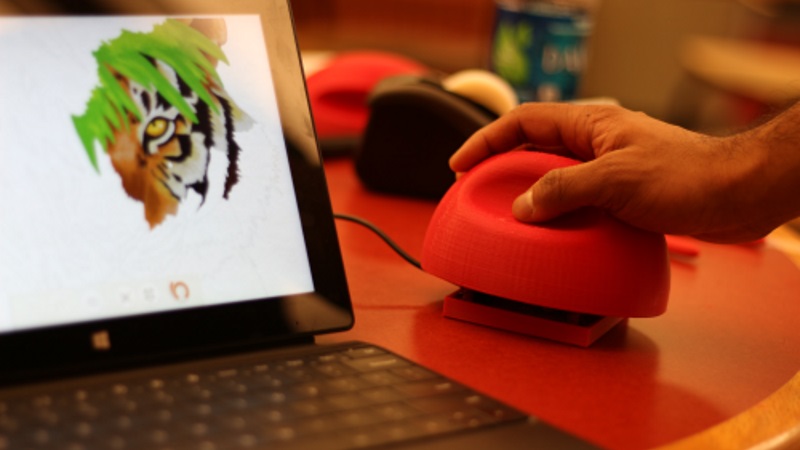
An ergonomic mouse for low-precision clicking — the entire case is the button.
Abstract
Anyone can suffer from hand ailments that hinder one’s ability to perform grapple and touch-based tasks. Moreover, those conditions may complicate tasks requiring great precision.
StampMouse is a special ergonomic mouse in which the mouse click button is attached to the bottom of the cavity. Mouse movement functions normally. However, mouse click has been adapted for a low-precision context: a user need only exert a downward force anywhere on the mouse to trigger a click. This action resembles the operation of a stamp, in which the construct rests on a flat surface, but the primary action occurs when the device is pressed into the surface.
This work was the final project for the Applied Fabrication course.

The Problem
Commercial ergonomic mice reduce wrist strain — but they still require precise finger placement to click. For users with conditions like tendinitis, arthritis, or other injuries affecting fine motor control, even pressing a small button can be painful or unreliable.
StampMouse eliminates the precision requirement entirely: the entire top surface of the mouse is the button. Press anywhere downward — like using a stamp — to click. The action requires no finger precision, only a palmar downward motion.
Design
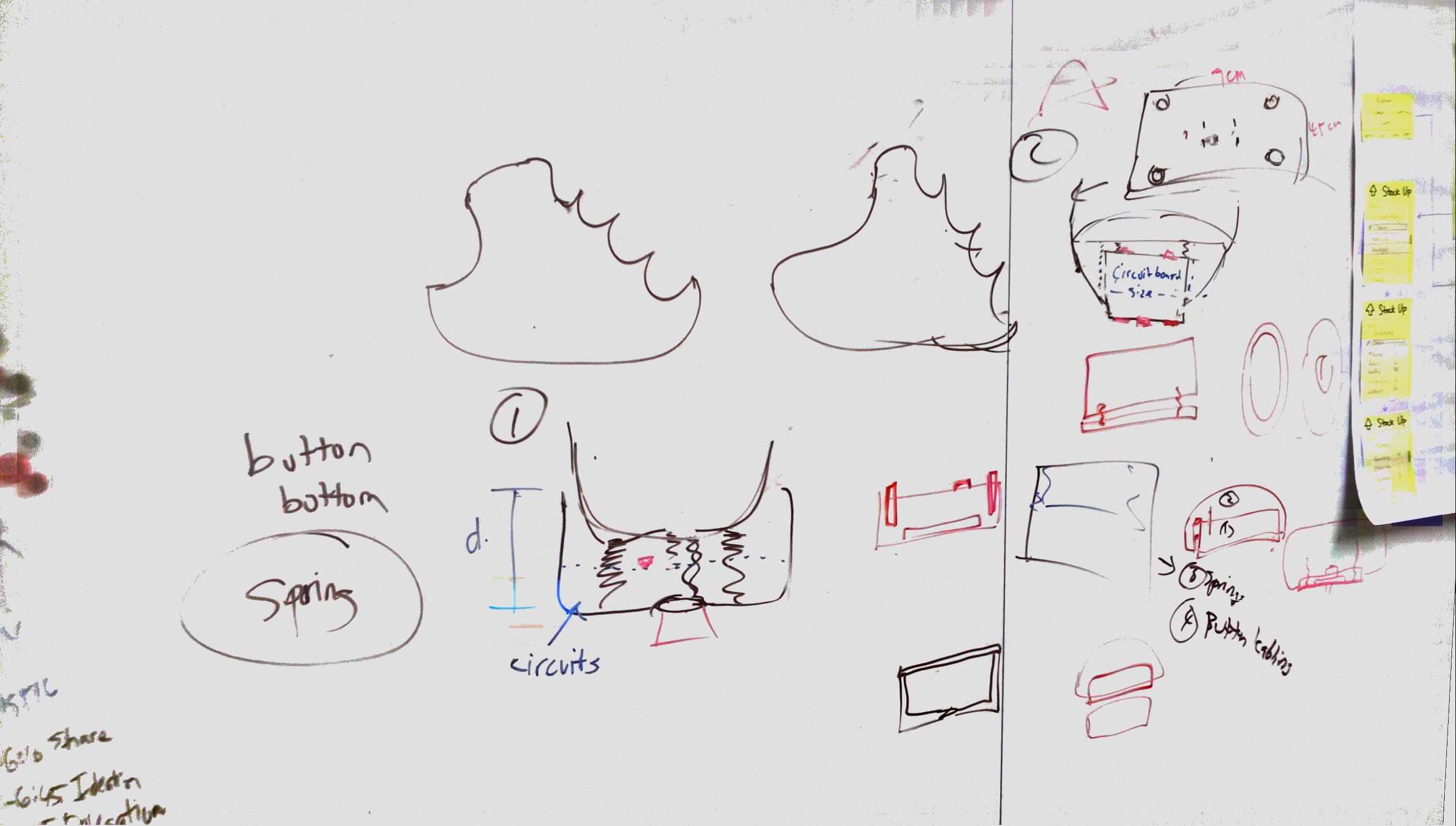
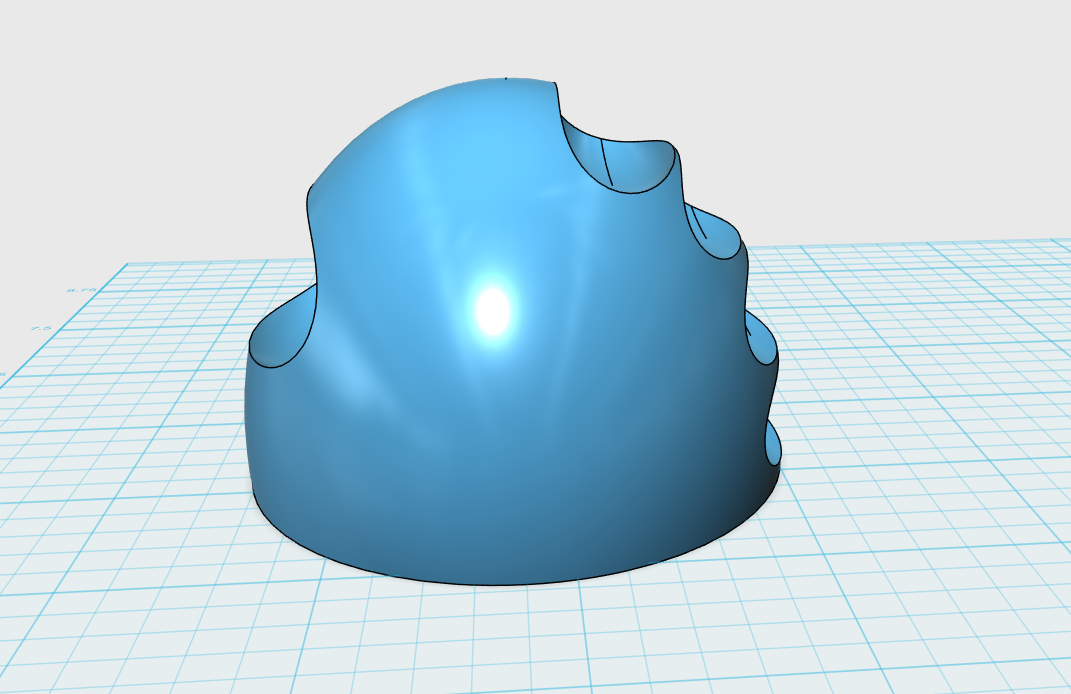
The interaction model was settled early: stamp-press anywhere on the case to click, normal optical sensor for movement. The form factor followed from that — a dome that fits naturally under the palm, with the click mechanism attached to the base rather than the top surface.
3D Modeling & Printing
Dimensions were based on a disassembled optical mouse circuit board — we extracted the PCB and designed the housing around it.
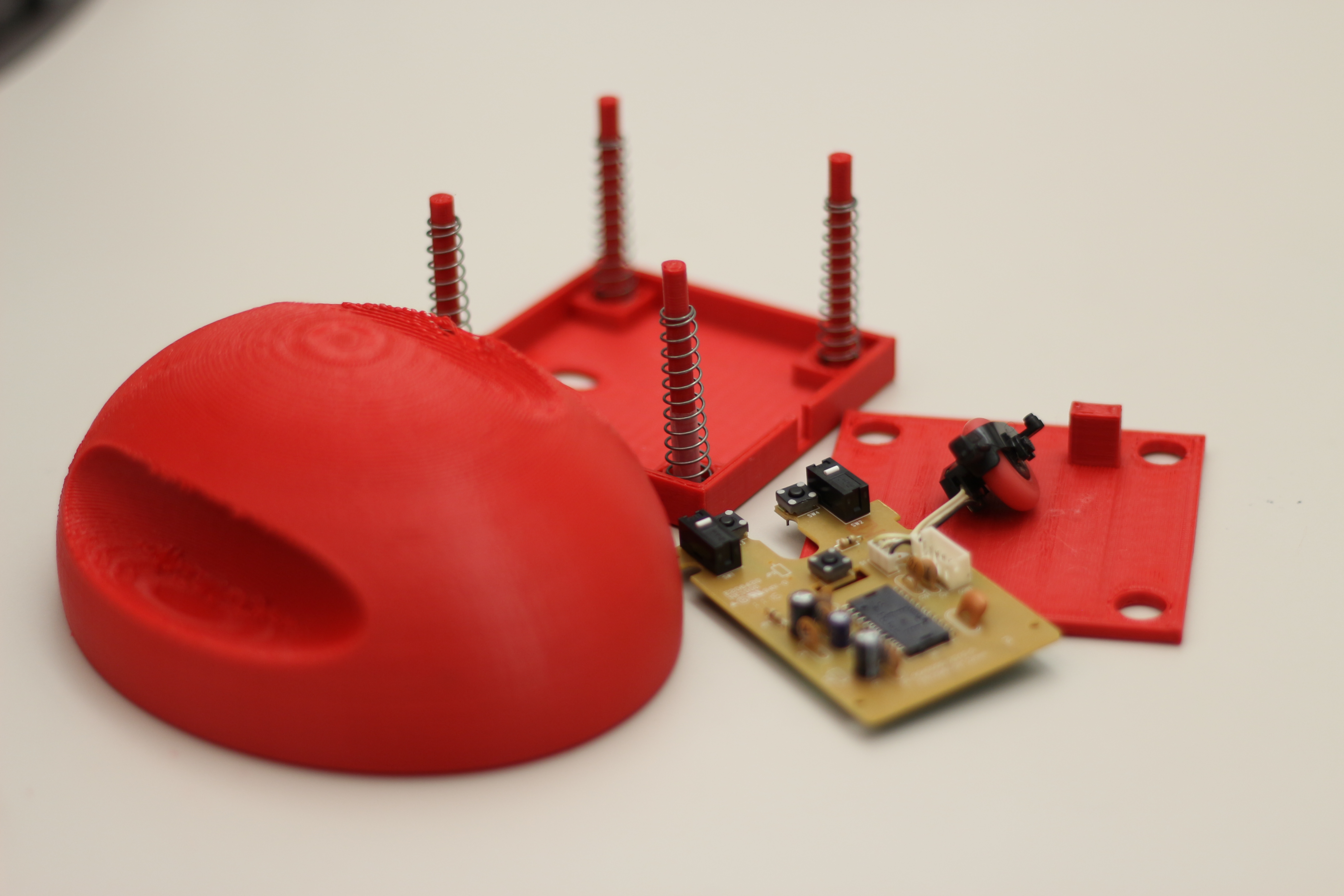
Components were printed and assembled. Initial dimensions were off — some trimming and coordination between components was needed before parts fit properly. The final prototype also revealed the mouse was slightly oversized for smaller hands, and click sensitivity caused the cursor to drift on press — both candidates for a next iteration.
Role
Project manager and 3D modeler. Responsible for the outer case geometry in 123D Design, coordinating component sizing across the team, and user testing.