Teudu
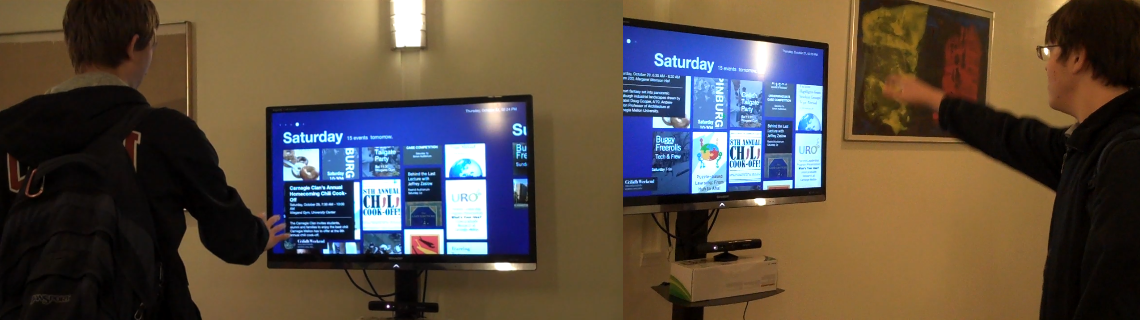
An interactive public event board with an invisible touch screen powered by the Kinect.
The Problem
CMU has no shortage of events — but students had no good way to discover them. Flyers get taken down, email lists get ignored, and organizations had no shared platform. Our Junior/Senior Information Systems capstone aimed to fix that with Teudu: a public digital event board that anyone could browse by waving their hand.
Prototype: Rails + Mouse Cursor
We started simple — a Ruby on Rails web application displaying event listings, controlled by a Kinect that emulated a mouse cursor. We deployed it in the student center and watched people try to use it.
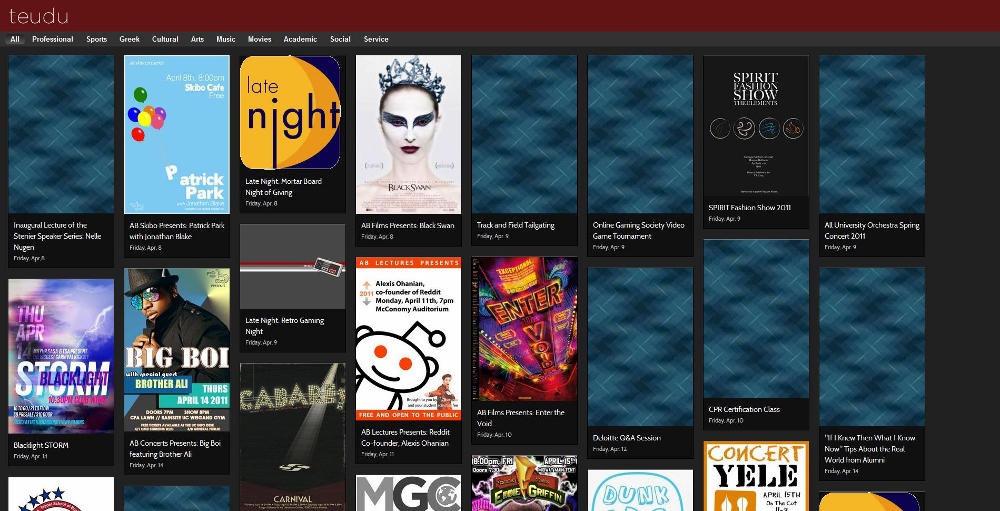
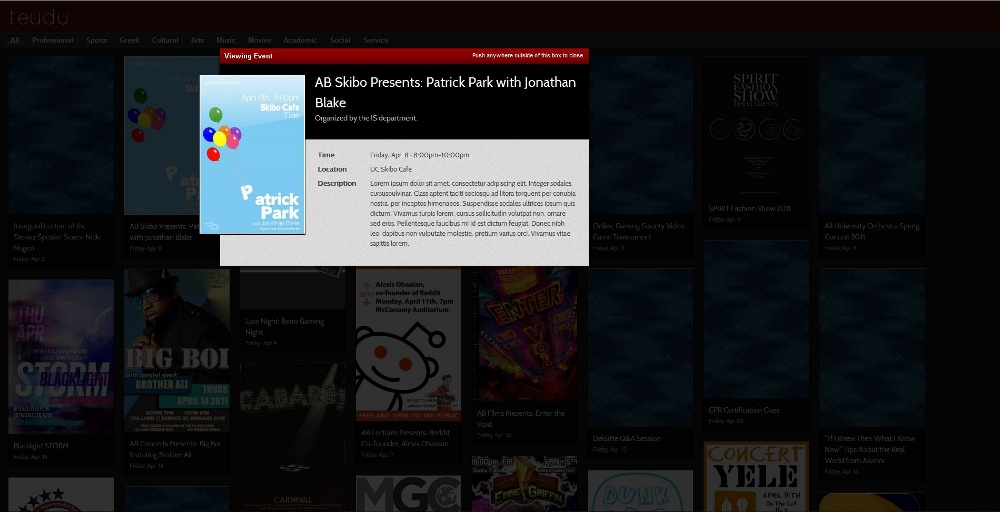
Users enjoyed the idea but couldn’t accurately control the cursor. The interaction model needed to change.
Final System: Natural Gesture Interface
We rebuilt the frontend as a dedicated Kinect WPF application — no mouse cursor, just gesture detection and a purpose-built UI. The design language drew from Microsoft’s Metro principles: fast in, find it, fast out.
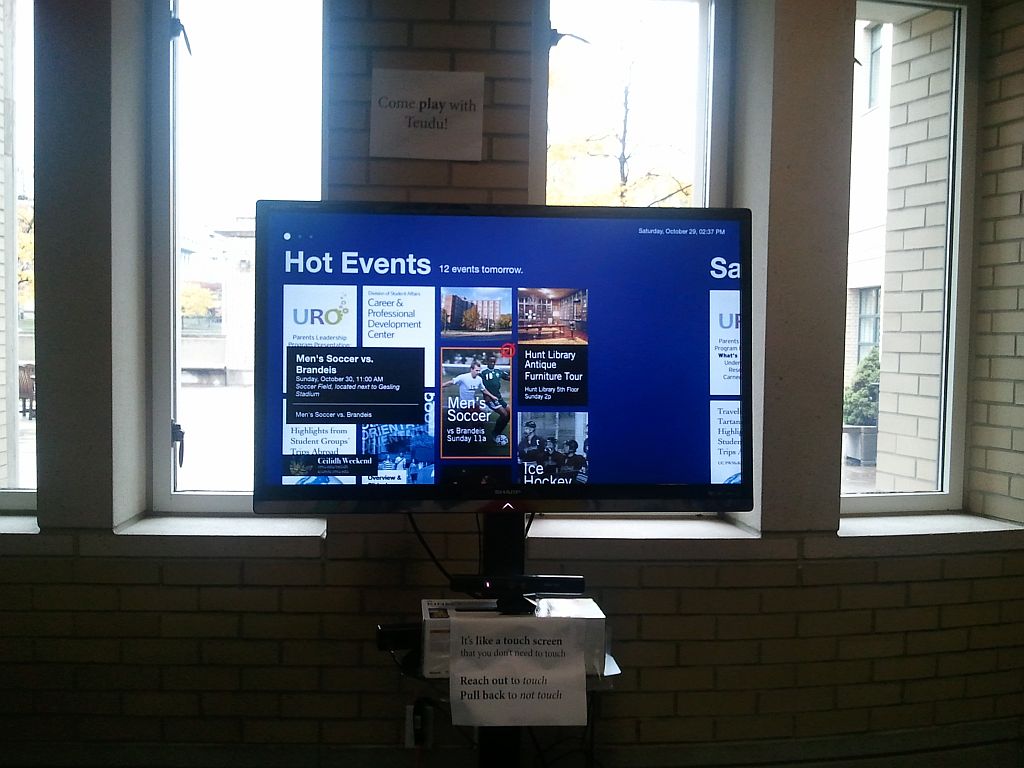
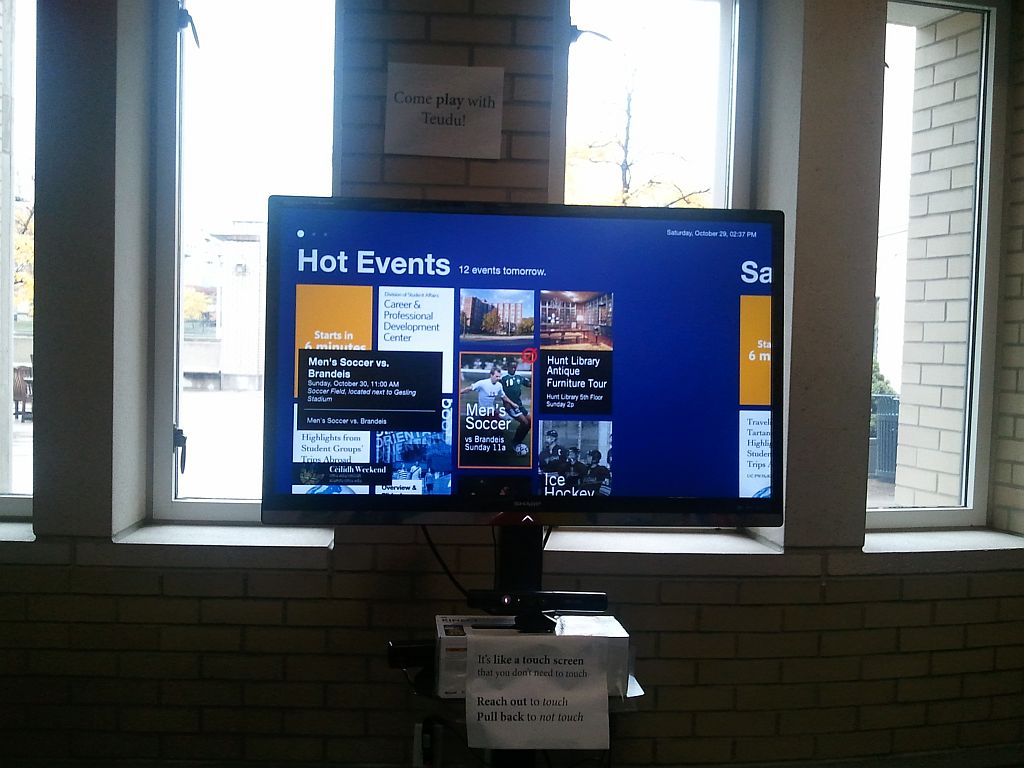
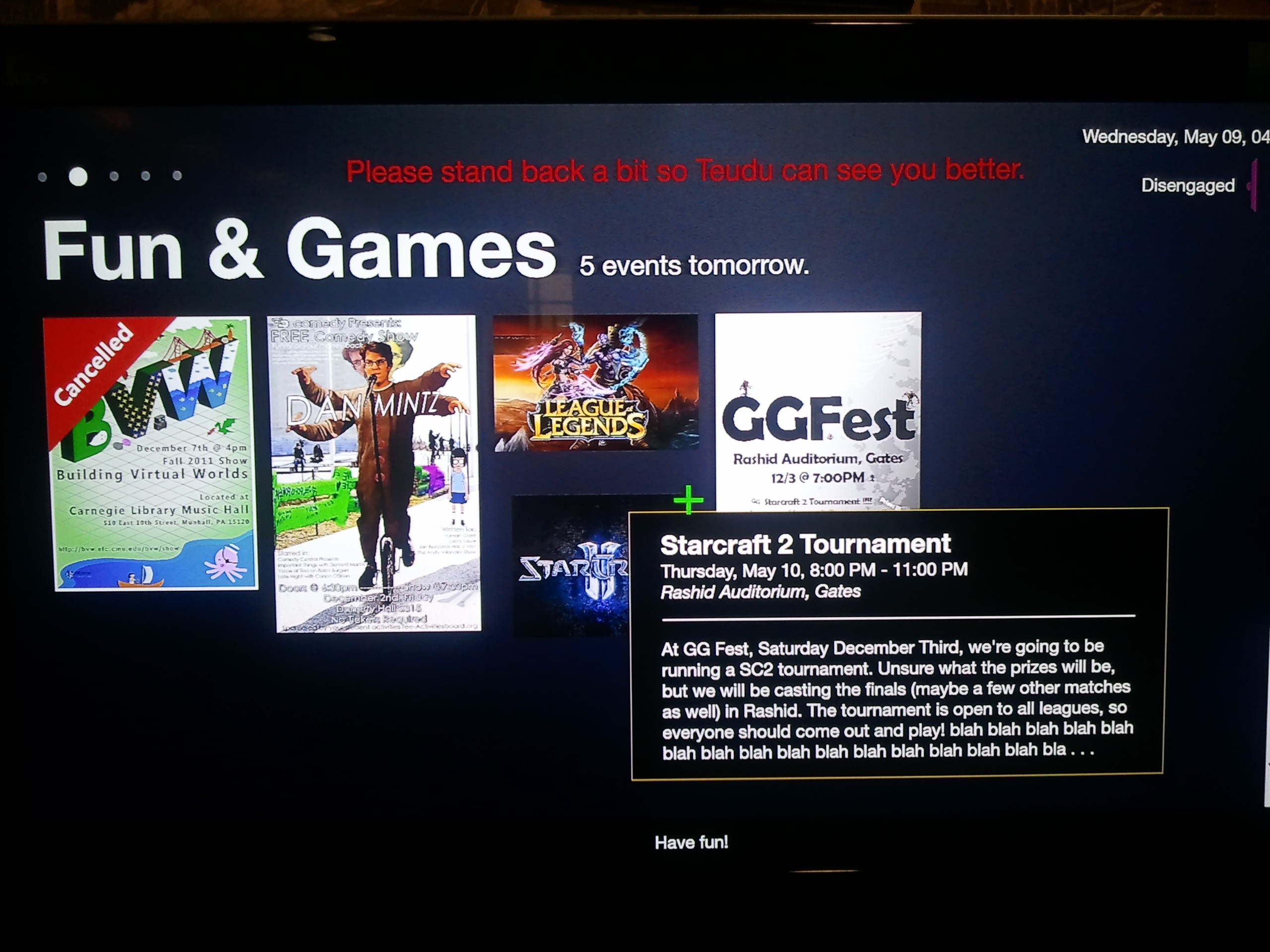
One major iteration driver was mutual awareness — the system needed to signal when it could see the user and what gesture it was interpreting. Without that feedback, users felt like they were waving into a void.
Role
Led the project and built the WPF gesture interface, iterating through user testing until the system felt natural to use.